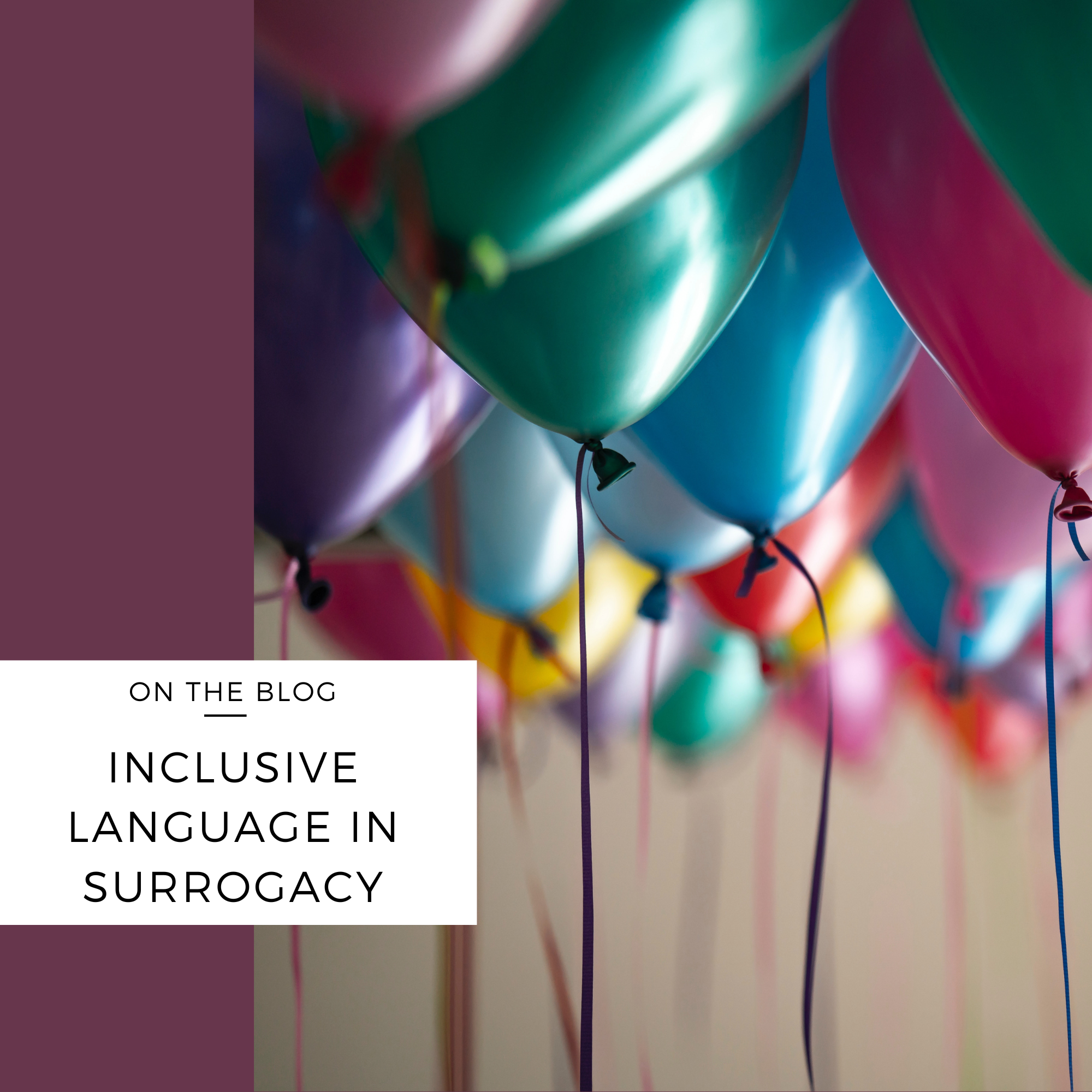
I’ve presented to health practitioners and fertility providers about inclusive language and care in surrogacy. When preparing, I asked my social media community what they wanted providers to understand about caring for a surrogacy arrangement, pregnancy and birth.
They spoke about respecting the surrogate’s bodily autonomy, privacy, clear information-sharing and the importance of birth photography. But the most consistent message was simple: use inclusive, appropriate language.
After I delivered as a surrogate following 12 hours of labour, a midwife placed the baby beside me and said, “Say hi to Mummy!” — despite the intended parents being in the room and everyone knowing this was a surrogacy arrangement. It wasn’t malicious, but for a baby I was carrying for two dads, it didn’t feel right.
Government forms still ask for “mother” and “father” and someone’s “maiden name.” Clinics and hospitals often default to referring to the surrogate as “mum.” These assumptions can make families feel unseen.
Many clinicians are accustomed to caring for heterosexual nuclear families. But families come in many forms. Inclusive language helps ensure everyone feels safe and respected in healthcare settings.
How can providers be more inclusive?
-
Be respectfully curious. Ask what you need to provide care — without being intrusive. Surrogates and intended parents are often happy to share, but they don’t want to feel like a spectacle.
-
Ask about pronouns and preferred language. Share your own. Ask the team how they’d like to be described. Some don’t like terms such as “birth mother” or even “the surrogate.” Using someone’s name is rarely wrong.
-
Provide continuity of care. A single point of contact or caseload midwifery model avoids families having to retell their story at every appointment.
-
Avoid assumptions. Comments based on preconceived ideas can feel like judgement. During my pregnancy, an obstetrician said, “I hope you didn’t meet on Facebook!” We had — like many Australian surrogacy teams. That moment signalled it wasn’t a safe space to be open.
-
Educate yourself. Understand the legal framework, review your organisation’s policies and listen to surrogates’ and intended parents’ experiences. You might like to listen to the Surrogacy Podcast to hear stories from intended parents and surrogates.
-
Update forms and systems. Patients shouldn’t have to cross out “mother,” “father,” “he” or “she.” Inclusive forms signal a non-judgmental, welcoming service.
Inclusive language isn’t difficult — but it is powerful.
If you would like to know about surrogacy in Australia, you can download the free Surrogacy Handbook which explains the processes and options. You can also find more resources for health practitioners supporting surrogacy pregnancy and birth.

Hi! I’m Sarah Jefford (she/her). I’m a family creation lawyer, practising in surrogacy and donor conception arrangements. I’m an IVF mum, an egg donor and a traditional surrogate, and I delivered a baby for two dads in 2018.
I advocate for positive, best practice surrogacy arrangements within Australia, and provide support and education to help intended parents make informed decisions when pursuing overseas surrogacy.