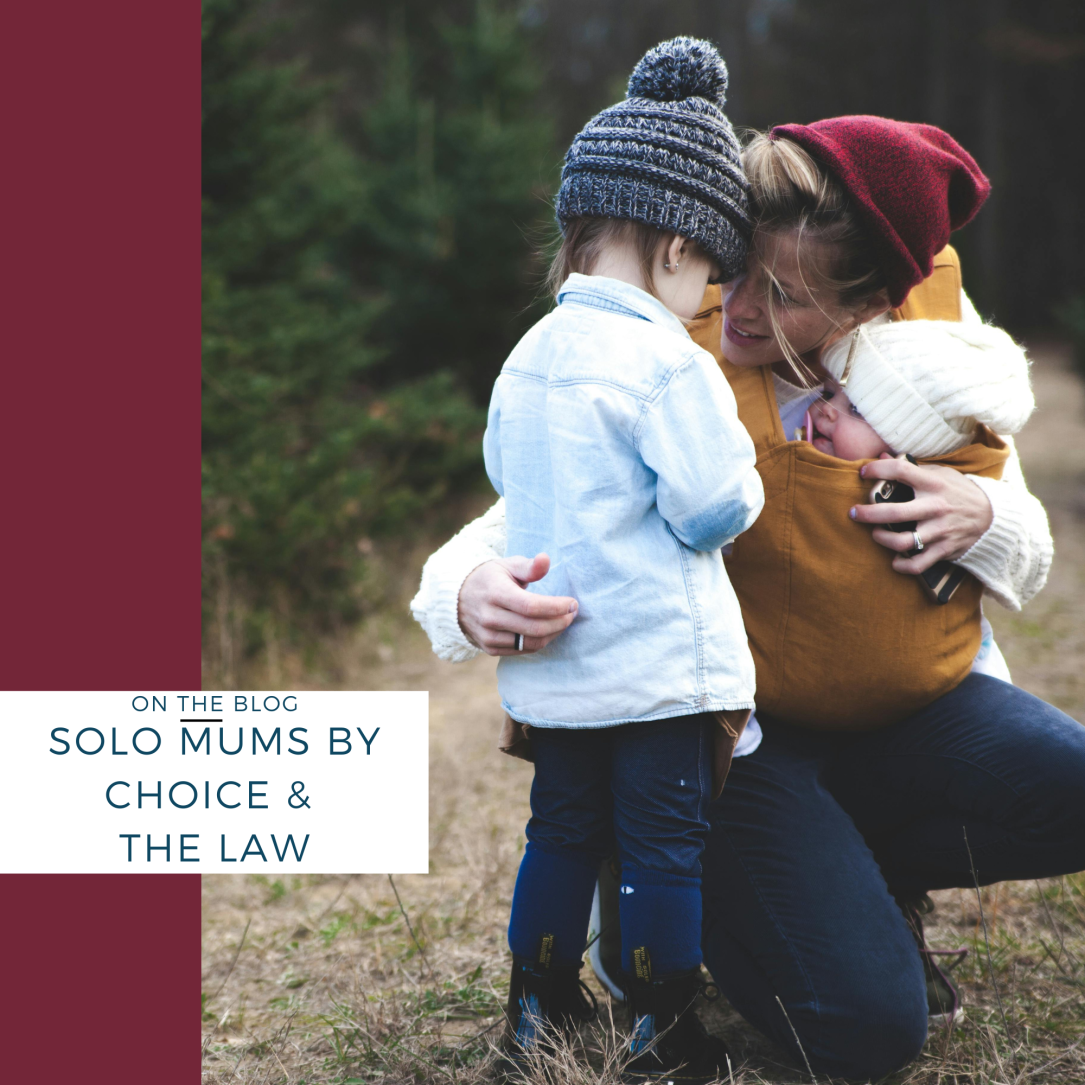
Solo mums by choice make an intentional decision to become a sole parent. But while family creation has evolved, the law hasn’t kept up to reflect the diversity of modern families. State and federal law parentage laws are confusing, particularly when a woman uses donor sperm to conceive.
At the federal level, section 60H of the Family Law Act 1975 provides that if a child is born following an assisted conception procedure while the mother is married to, or in a de facto relationship with, another person, and the non-birth partner consented, the Act treats the child as the child of the birth mother and their partner.
Significantly, a donor, someone who provided sperm but was not in a relationship with the mother at the time, is expressly excluded from legal parentage for the purposes of section 60H(1)(d).
This is important: in a two-parent context, section 60H effectively removes the biological donor and protects the legal status of the intended parents.
For solo mums by choice, that clarity is lacking.
Section 60H doesn’t clearly say what happens when the woman has no partner at the time of conception. The wording is tied to a spouse or de facto partner, so a single woman using donor sperm doesn’t fall neatly within the section.
The legal silence means there’s no presumption in federal law just for solo mothers using donor gametes. In the absence of a partner, the ordinary legal meaning of “parent” could, in theory, be open to interpretation if a dispute arises.
This lack of legal clarity for solo mums by choice can fuel anxiety when they ask, “Could my donor ever claim parental rights?”
In contrast to the federal law, state laws provide a clearer protection for solo mums by choice and the donors. At the state levels, we have legislation including –
Section 15 of the Victorian Status of Children Act 1974.
Section 14(2) of the NSW Status of Children Act 1996.
Sections 21 and 22 of the QLD Status of Children Act 1978.
Section 10(c)(4) of the SA Family Relationships Act 1975.
As an example, the Victorian Act provides that where a woman with no partner becomes pregnant as a result of an artificial conception procedure using donated semen, the man who produced that semen is presumed, for all purposes, not to be the father of any child born.
Should solo mums be worried that a donor could claim parent status?
Here’s the good news:
- State laws provide significant protection with written presumptions of parentage where a solo mum by choice conceived with sperm from a donor.
. - Section 60H of the Family Law Act also expressly excludes donors from being legal parents when there’s a consenting partner in a couple situation, and does not include them as parents in single parent contexts.
But there’s a catch:
Because section 60H doesn’t spell out how single donor conception is to be dealt with, and because federal law doesn’t provide a straightforward statutory presumption for solo mums, there remains legal ambiguity, and ambiguity breeds concern.
Case law has shown that, if there’s no express federal rule, courts may be tempted to rely on broader interpretations of “parent”, even though this is rare and not the norm.
So, should solo mums by choice spend their days fearing a donor will turn up at the doorstep asking for co-parenting orders? Probably not. But should they understand the gaps in the law and the emotional uncertainty that comes with them? Absolutely yes.
Solo mums conceiving with a donor should consider ways to protect themselves, including seeking legal advice and entering a written donor agreement prior to conceiving. Donor should also seek this clarity before entering a donor arrangement.
We are long overdue for reform.
Some laws reflect a world where heterosexual couples are still the “default” family form. The Family Law Act wasn’t written for solo mothers using ART, and it certainly wasn’t written for bisexual, queer and non-heteronormative parentage arrangements.
Here’s what reform could, and should, do:
- Amend Section 60H to explicitly protect solo mums by choice
The Family Law Act needs a clear, statutory presumption that sperm donors, known or anonymous, are not legal parents where a woman conceives by choice. This fills the current gap, gives certainty to courts, and reflects the intentions of the families involved.
- Harmonise federal and state parentage provisions
Given that states like Victoria, New South Wales and Queensland already have protective presumptions, the federal Act should recognise and defer to those clear state presumptions without leaving room for ambiguity. Many families currently have to navigate two sets of laws that don’t quite align.
- Protect family diversity in law
The Act should be updated to explicitly acknowledge that families, including SMBCs, come in diverse forms. Parentage provisions should affirm that intentional, socially recognised families are full families under the law, no matter how they were conceived.
Until that happens, too many women will feel that the law doesn’t fully have their back, even if in practice the risk of a donor successfully claiming parental status is small.
The best protection is knowledge. Before you enter a donor arrangement, research and educate yourself about donor conception, the laws and intentions that support solo parenthood.
If you are entering a donor arrangement, you need to get legal advice and consider having a Donor Agreement drafted. I can provide template Donor Agreements – contact me here.
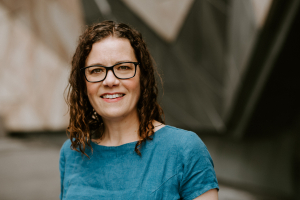
Hi! I’m Sarah Jefford (she/her). I’m a family creation lawyer, practising in surrogacy and donor conception arrangements across Australia.
I’m an IVF mum, an egg donor and a traditional surrogate, and I delivered a baby for two dads in 2018.